



The overindulgence of Mardi Gras is over and we are now in a period of scarcity known as Lent. For many, this time of the year—the more than six weeks between Ash Wednesday and Holy Thursday preceding Easter—is a time marked by a smudge of ash on your forehead, Friday night fish fries, and giving up comforts like chocolate.
But beneath these modern traditions lies a complex history shaped by both religion and survival that pushes us to persevere to Springtime.
Let’s dig into that history!
Forced scarcity
Imagine what late February and March must have felt like in the Northern Hemisphere during earlier millennia. As we explored during a recent Carnival season post, the food societies had preserved from their Fall harvest was spoiling and it would still be weeks or months until the Earth bore fruit and vegetables again.
In fact, the pre-Christian predecessor to Mardi Gras was a final celebration to feast on what remained of past harvests—an effort to raise morale and put on a few pounds before this period of scarcity.
Christian adaptation
The word Lent comes from the Old English lencten, which literally translates to “spring” or “the lengthening of days.”
In the first two centuries of the Christian Church, “Lenten” preparation was brief—often lasting only 40 hours. This time represented the time Jesus was said to spend in the tomb following his crucifixion.
Initially, this period was a rigorous “boot camp” for catechumens—converts preparing for baptism on Easter Sunday. Over time, the entire congregation began to join them in solidarity, adopting a spirit of penance and reflection.
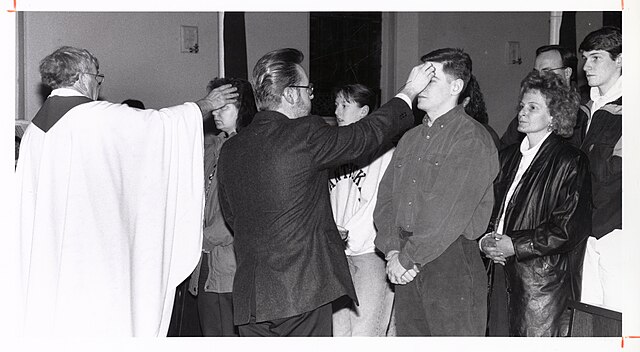
By the Council of Nicaea in 325 AD, that 40 hour Lent was becoming a 40-day period standardized across various Christian regions. This specific number was chosen to mirror several biblical events: the 40 days and nights of the Great Flood in the biblical book of Genesis, the 40 days Moses spent on Mt. Sinai waiting for the Ten Commandments, or the 40 years the Israelites spent in the wilderness after fleeing Egypt.
Most commonly, however, the 40 days of Lent is connected to the 40 days Jesus spent fasting and being tempted by the devil in the desert. Like for Christ, it is now meant for Christians as a time for spiritual purification and preparation for Easter.
In addition to a spiritual purpose, it also served a more practical one.
Matter of survival
Just as modern Christians are asked to show self-discipline by giving up certain pleasures during Lent, earlier followers of the religion were asked to give up meat.
The reason was likely a matter of life or death.
Imagine it is March and your children are hungry. Your Winter harvest is dwindling and it will be weeks until the Earth once again bears fruit. You do have a cow, though it is not yet mature.
You might be tempted to slaughter said cow, providing relief for your children—an understandable choice. The Church, however, is worried about the long-term well-being of the town. If that cow is allowed to mature, it can reproduce to provide future milk and meat for many mouths.
Christianity and its many rules were a tool to keep the town working toward a common goal instead of selfish ends. The abstinence of Lent was a tool for survival. And so was Carnival.
In fact, the term comes from carnavale—Italian for “goodbye to meat.”

The evolution of fasting
For most modern Christians, Lenten fasting means no meat on Fridays. Historically, however, the rules were more demanding. Observers were typically permitted only one meal a day, taken after sunset.
That meal excluded meat, as already mentioned, but it also excluded any products derived from animals such as eggs, fats, butter, and other dairy products. (That’s why Christian communities around the world eat these products one last time on Fat Tuesday.)
A quick math lesson
If you are particularly observant, you might have noticed that the period between Ash Wednesday (the first day of Lent) and Holy Thursday (which leads up to Easter) is actually 46 days instead of 40.
This is because the six Sundays between these two days are considered celebrations of the Resurrection and not included in the actual fasting count. The 40 days refers to 40 days of fasting.
Lent around the world
Today, Lent is observed by Catholic, Orthodox, Anglican, and many Protestant denominations. While the theological core remains the same, the cultural expressions vary significantly by region. Here are just a small number of examples:
The Philippines: Public Devotion
In the Philippines, Lent is a deeply public affair. One of the most unique traditions is the Pabasa, a non-stop rhythmic chanting of the Pasiong Mahal (the Passion of Christ). Communities gather to chant the text over several days and nights. On Good Friday, Senakulo or Passion plays are performed in streets and town squares to depict the trial and suffering of Jesus.
Mexico: Capirotada and Community
In Mexico, the culinary traditions of Lent are distinct. Because meat is avoided, Capirotada becomes a staple. This is a spiced bread pudding layered with cinnamon, cloves, raisins, nuts, and cheese. Each ingredient holds symbolic weight: the bread represents the Body of Christ, the cinnamon sticks represent the wood of the Cross, and the cloves represent the nails.
The Eastern Orthodox Tradition: “Great Lent”
In Eastern Orthodox churches, the season is known as Great Lent. It begins on Clean Monday rather than Ash Wednesday. The fasting remains quite strict; many adherents follow a plant-based diet for the entire duration, omitting meat and dairy. The focus is on “bright sadness”—the idea that while the soul acknowledges its shortcomings, it does so with the joyful anticipation of the Resurrection.
Ireland: Modern Fasting
Ireland has moved from the “Black Fast” (bread and water) of the past to more modern forms of abstinence. It is now common for people to take the “Pioneer” pledge (abstaining from alcohol) for the duration of Lent. Additionally, the Trócaire box is a staple in Irish homes, where families save spare change throughout the 40 days to donate to international poverty relief.

Why it matters in the 21st century?
Traditional fasting still exists, but so do modern day alternatives. Some limit their social media intake while others attempt to reduce their energy consumption, to name two examples. Others choose to add something: maybe daily meditation, volunteering, or writing letters of gratitude to loved ones.
Whether you view this time period through a religious lens or a secular one, humans have been using this season as an opportunity to reset for thousands of years. And, regardless of if that period of scarcity culminates in Springtime or Easter Sunday, many have found it extra special to reach it in a way that taps into a world’s worth of tradition.