

In our most recent blog post, we tackled Irish history in New Orleans, from its beginnings in the 1700s all the way to nearly the mid-point of the 19th century. With St. Patrick’s Day just around the corner, we wanted to finish our exploration of this immigrant that has added so much to the Crescent City and its culture.
We’ll begin with an event many Americans have learned about: the Great Potato Famine.
The Great Potato Famine and a Growing Community
By the 1840s, Britain’s Penal laws had, both, directly and indirectly resulted in an overreliance on the potato. The average Irish man, for example, was eating more than 14 pounds of potatoes every single day!
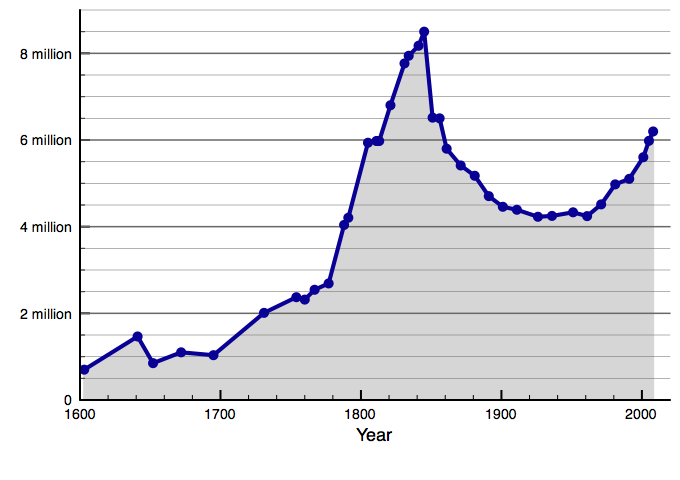
So when a natural potato blight destroyed much of the potato crop between 1845 and 1849, it became a devastating crisis. For example, in 1844, 8.5 million people lived in Ireland. Over the next 10 years, nearly 2 million of those would leave the country. Another 1 million would remain and die as a result of the famine. By 1911, the population of Ireland was only 4.39 million — barely more than half what it was before the crisis!
Of the victims able to leave during the famine, a sizable number chose New Orleans as a destination, where there was already a growing Irish community. This was a big moment for what would become the Irish Channel.
Through the 1820s, the area was mostly sugar plantations. As it was sold and gradually subdivided, the nascent neighborhood was known as “Lafayette” — not to be annexed by New Orleans until 1852.
During the 1840s and ‘50s, as immigrants arrived, the main point of entry was Adele Street at the edge of the Irish Channel near where the Walmart sits today.
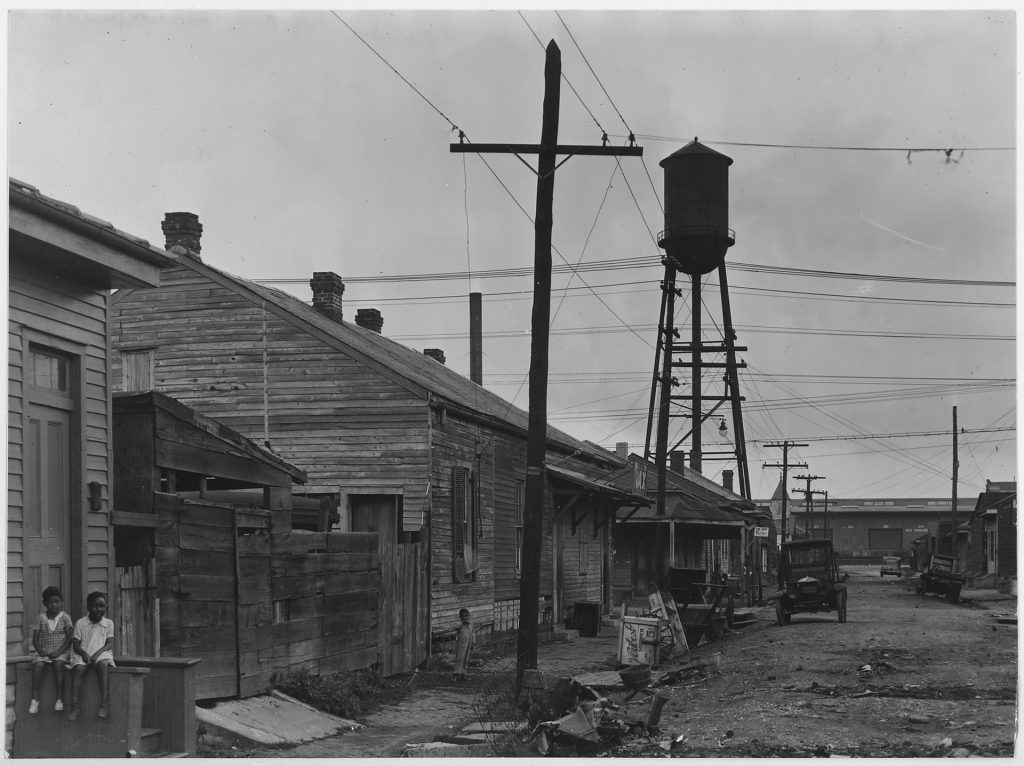
Those that were fortunate enough to escape the famine and survive passage across the Atlantic arrived with very little money. Most stayed close to where they landed and took up residence in simple accommodations. Construction in the Irish Channel boomed between 1850 and 1890, and the housing type of choice — as it was in many of the poorer areas of the city at this time — was the shotgun home (particularly the shotgun double).
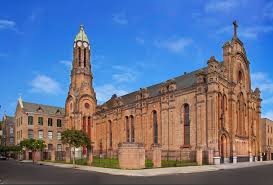
As Irish families settled the neighborhood, it sparked a chain reaction, encouraging more Irish to stay near others from their home country. St. Alphonsus Church was built for the growing Irish Catholic community in 1855. One of the few surviving national examples of a richly multi-colored church interior predating the 1870s, the church has since been declared a National Historic Landmark. Services were so popular in the latter decades of the 1800s that the city added additional street cars to transport the large number of attendees there.
St. Alphonsus was part of a religious complex — referred to as “Ecclesiastical Square” — once occupying five adjacent blocks. This included two other churches — one for the French and one for Germans (St. Mary’s Assumption Church, which is the only church of three still in use today) — an orphanage, nine school buildings, a gymnasium, three churches, the priests’ residence and gardens, two convents, stables, a laundry and other supporting buildings.
In the decades following World War II, the development of low-income housing in the neighborhood, as well as “White Flight” migration to the suburbs, caused a reduction in the St. Alphonsus’ congregation. It closed in 1979 when the congregations of the three churches were merged, and today it is home to the St. Alphonsus Art and Cultural Center, which is open to visitors at regular times throughout the week.
Working on the Docks
While just decades earlier, many Irishmen would have been found digging the New Basin Canal, for example, by the 1850 census, half of the Irish men in New Orleans were listed as employed in a field other than “common laborer.” They were represented in nearly every field, from medicine to education to engineering to one of several local breweries in the Channel. And, like in many other cities across America, they began to dominate the port and the commerce associated with it.
This especially made sense in New Orleans, where so many Irishmen lived in the Irish Channel — a neighborhood directly adjacent to the docks. They worked as mechanics, draymen, screwmen and in a host of other roles.
We often think of Irish immigrants in New Orleans as being victims of their challenging circumstances, but that also wouldn’t be the complete picture. Decades before unions existed, Irish steamboat workers shut down the port several times in the 1850s, refusing to work or to allow anyone to cross the picket line until wages were raised.
They worked collectively to limit the number of screwmen, for example, as a strategy to keep wages high. Even the impoverished immigrants working on the New Basin Canal banned together for one of the first successful strikes in the city. And Irish women took advantage of the unmet demand for domestic and service industry workers by negotiating for better working conditions and flexible schedules that better allowed them to meet their familial and community commitments.
But sometimes this collective action could turn into what some called “clannishness.” The Irish often extended economic opportunities to family members and other Irishmen, with reports of Irish mechanics using physical force to intimidate and exclude enslaved workers and free men of color from the trade.
The Irish Channel — especially around the docks — became a haven for thieves and prostitutes, while gang activity centered around the corner of St. Mary Street and Religious Street. Conflicts often generated from ethnic tension in the neighborhood and manifested between groups such as the St. Mary’s Market Gang, the Shot Tower Gang, the Pine Knot Gang, the Ripsaw Gang, the Crowbar Gang, and others.
After Abraham Lincoln’s election in 1860, the Irish supported the South’s desire to secede, afraid that an end to slavery would result in free Black people taking their employment and position in society. In New Orleans, it was the Irish community which provided the largest number of recruits to the Confederate army.
Notable Irish(wo)men
Irish immigration to New Orleans slowed dramatically after the Civil War as the South’s economy struggled to recover. But the number of Irish men and women in the Channel who shape our city continues to grow into the present day. Here are just four incredible Irish individuals among many possible choices.
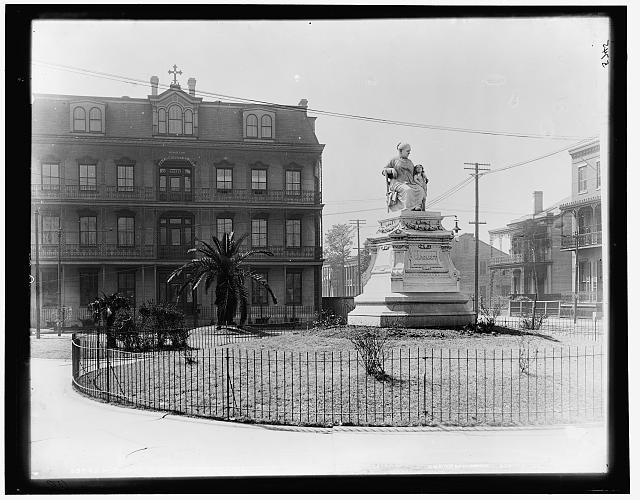
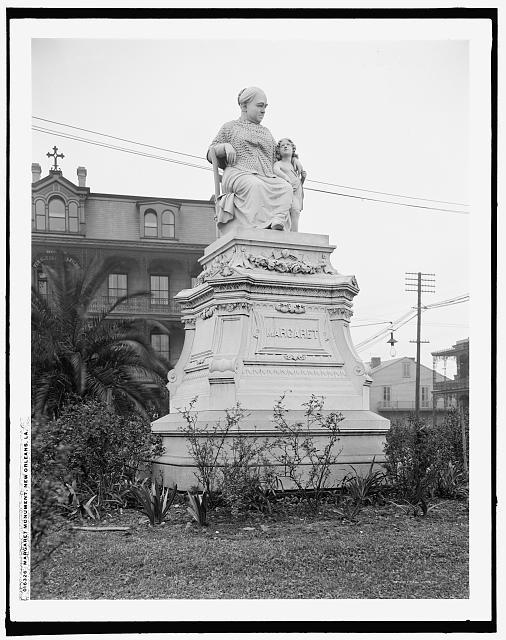
Margaret Haughery (aka “The Bread Woman,” “New Orleans’ Bread Woman,” “Mother of Orphans,” “Mother to the Motherless,” and Saint Margaret”) was a 19th century Irish immigrant who used money made from her many businesses — most notably in bakeries — to fund her life’s real mission: to care for the destitute, to feed the poor, and to build orphanages. Her statue, dedicated on July 9, 1884 in the Lower Garden District, near where Prytania street runs under the Crescent City Connection, is the first publicly erected statue of a woman in the United States, the first monument to an American female philanthropist, and the only known statue to a baker!
But it wasn’t only bakers. New Orleans also produced many great boxers in the early 20th century. The corner of Rousseau and St. Mary streets hosted so many street fights, it was known as “The Bucket of Blood.” Boxing promoter Johnny Galway, an Irish Channel resident, visited the corner to recruit fighters; and boxers from across the country — such as heavyweight champion John L. Sullivan — came to New Orleans to train. But local boy, Martin Burke — who fought around the country and was even sparring partner to the famed Jack Dempsey — was idolized most of all in the Channel. Burke became a symbol of Irish Pride and gave hope to the community that “anyone stood a fighting chance.”
Also in the early 1900s, Eleanor McMain served as head resident of the Irish Channel’s Kingsley House, the largest and most influential settlement house in the South. Settlement houses provided services such as daycare, education and healthcare to improve the lives of the poor in the neighborhood they served, and McMain transformed Kingsley House into a focal point of progressive movements in the New Orleans area. She furthered women’s causes in the early years of suffrage and, today, a school on Claiborne Avenue bears her name.
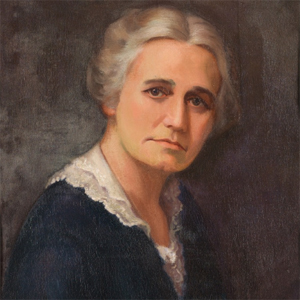
Finally, Richard “Dickie” Brennan was born and raised in the Irish Channel. His Dickie Brennan & Company operates more than a dozen restaurants in New Orleans, alone, including the renowned Commander’s Palace. But Brennan has done much more for this city than elevate its cuisine (as if that wasn’t enough!). In 1969, he revived the Krewe of Bacchus to attract tourists to the city for Mardi Gras. He was also involved in the formation of the New Orleans Convention and Visitors Bureau, was a past president of the Louisiana Restaurant Association, and sat on the board of the National Restaurant Association.
And these are just four of many exceptional Irish Channel residents to shape our city.
Celebrating St. Patrick’s Day
St. Patrick’s Day in New Orleans is an opportunity to celebrate these Irish-Americans, as well as the Irish culture in our city at-large. It is a celebration we have been honoring for more than two centuries.
The first St. Patrick’s Day celebration in New Orleans was held in 1806 and was attended by the Governor, as well as several other state dignitaries. It was a warm affair that included dinner and 17 boisterous toasts — with attendees drinking to everything from George Washington to the King of Spain to the Irish Shamrock.
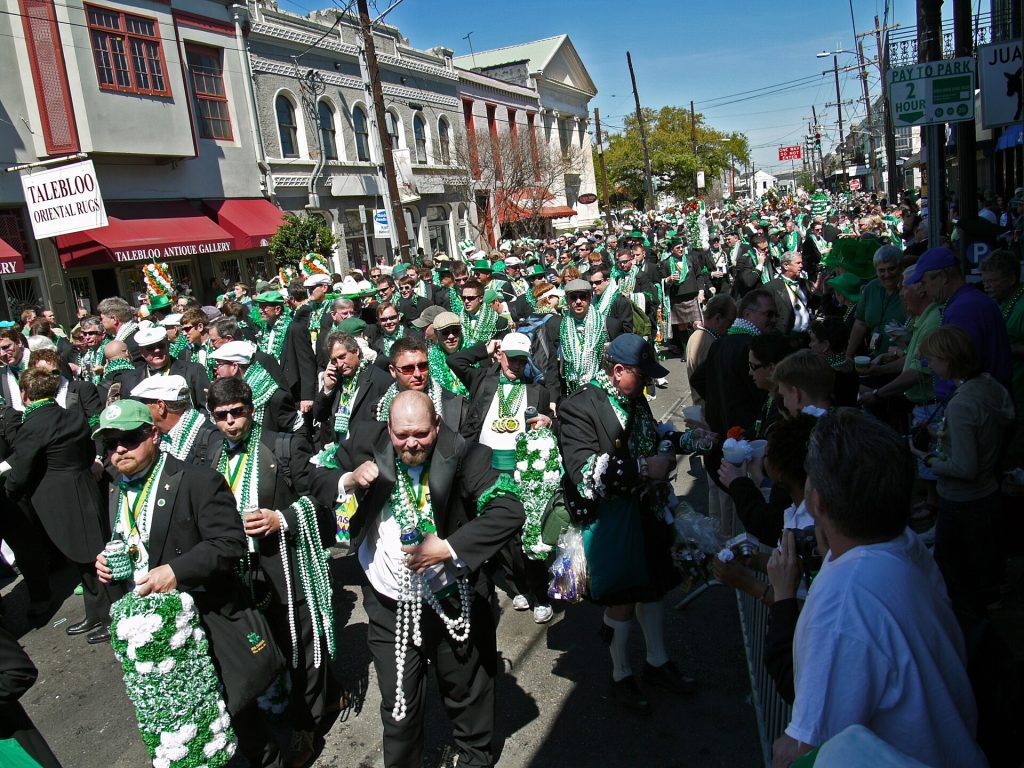
The celebration has evolved over the years, but with few exceptions it has typically involved a parade (or many). And even though technological advances eliminated the need for as much manpower on the docks — and the neighborhood is now much more African American and Latino than Irish and German — the Irish Channel remains the central location of festivities.
The neighborhood retains much of its architecture from the late-19th century. Those shotgun houses, plus several breweries and neighborhood bars, remind us what it might have been like to live in the Channel when one in five New Orleans residents were still Irish!
St. Patrick’s Day is another chance to remember the accomplishments of our Irish neighbors, and here are some of the ways you can celebrate this year! Sláinte and happy St. Paddy’s Day!