

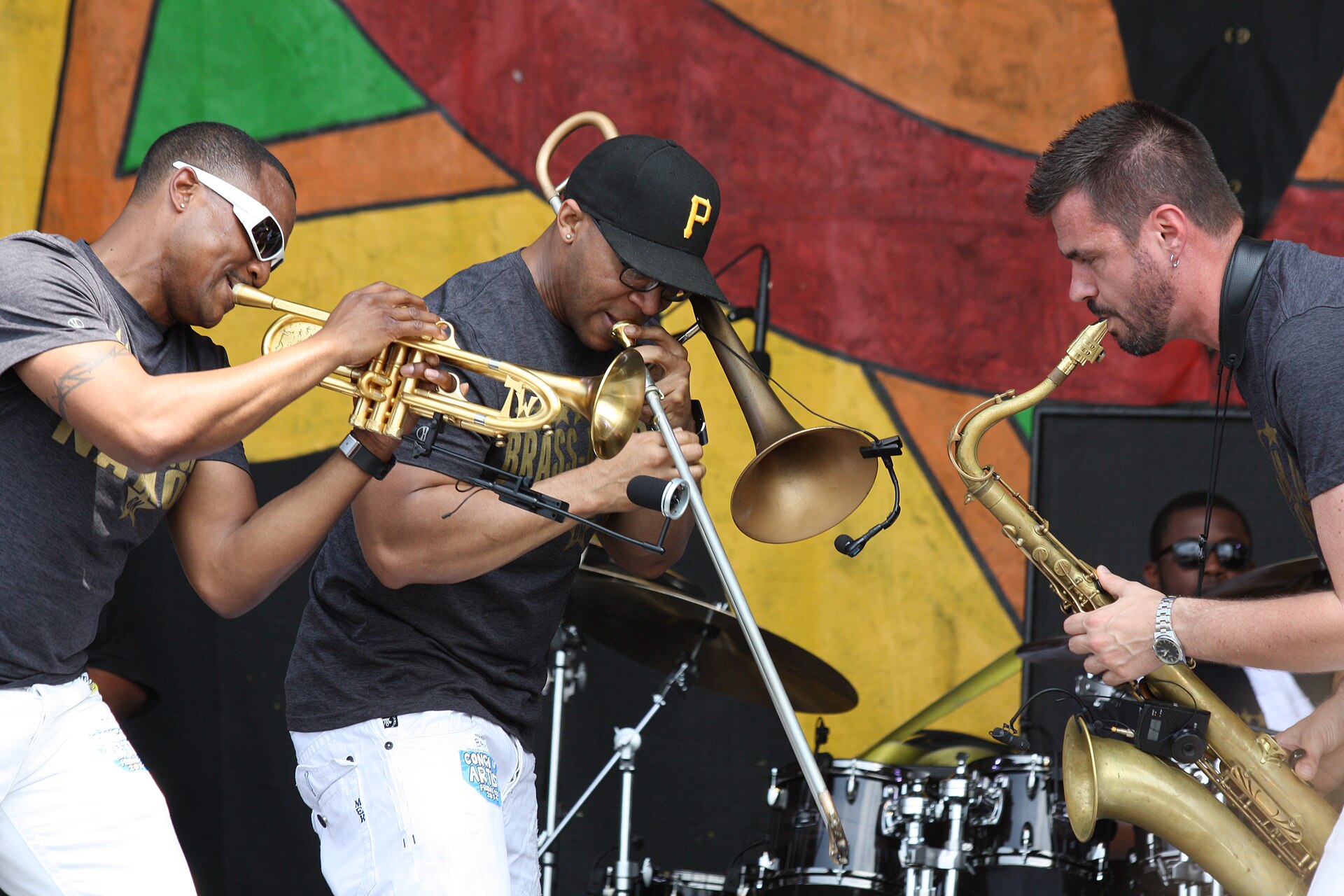
It’s festival season in New Orleans! There are tons of great options this time of year, but of course, the city’s crown jewel is the New Orleans Jazz and Heritage Festival, more simply referred to as Jazz Fest. That means Mango Freezes and cocoon de lait poboys. Second-lining Mardi Gras Indians and memories of Bruce Springsteen taking the stage after Hurricane Katrina. The commemorative posters. The colorful flags used to help you find your group. The crawfish beignets, crawfish strudel, and crawfish monica!
There has been no shortage of iconics and iconic moments during the Jazz Fest’s 56-year history. And that makes sense because this is a festival that brings in approximately 500,000 attendees each year.
But it wasn’t always that big.
So in honor of the 2026 New Orleans Jazz and Heritage Festival, let’s trace this spectacle of an event—in many ways synonymous with New Orleans—back to its earliest days.
Starts and stops
Taking Jazz Fest from an idea to an actual festival deserves a blog post all its own. This nearly decade-long journey was wrought with the same racial tensions that plagued the nation at the time.
It all began with the Newport Jazz Festival in Newport, Rhode Island. Founded in 1954, it was the first jazz festival in the United States, catching the attention of leaders in cities across the country. That included leaders in New Orleans.
In 1962, the Newport festival’s legendary organizer, George Wein, was contacted by Olaf Lambert, manager of the French Quarter’s Royal Orleans Hotel. Lambert wanted Wein to bring his festival model to the Crescent City. Unfortunately New Orleans, and more broadly the American South, was not ready for such a festival. City ordinances, for example, were still in place that didn’t allow Black and white musicians to perform together or multiracial crowds to congregate in public spaces.
When a similar overture was made from Lambert to Wein in the spring of 1965 to organize the “New Orleans International Jazz Festival,” efforts were once again postponed due to “integration tensions.” Meanwhile, attorney Dean Andrews, Jr. (infamously convicted of perjury in a trial related to the assassination of President John F. Kennedy) founded the “Annual New Orleans International Jazz Festival,” which failed due to its inability to attract big-name musicians.
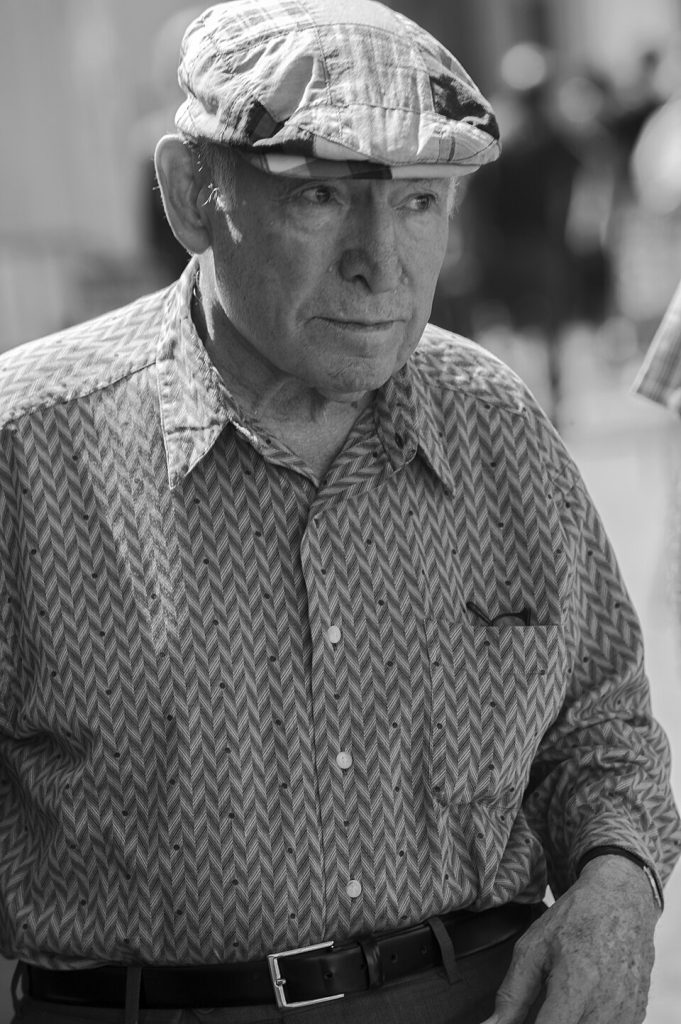
The founding of another jazz festival was attempted in time for the city’s 150th anniversary in 1968. Wein was once again approached to organize the festival, but this time the offer was revoked when it was discovered that Wein’s wife was African American. The festival, under the name “The International JazzFest,” went on without Wein and included headliners like Louis Armstrong and Duke Ellington. But the event lost money in its second year and folded.
After that failure, still in 1969, Durel Black, who was president of the New Orleans Jazz Club, approached Wein one final time about founding a new jazz festival in the Big Easy. He assured Wein that interracial marriage was no longer an issue here. Wein agreed to start the festival, motivated, he said, by a desire to protect the unique culture of southeastern Louisiana.
Humble beginnings
Learning from the failures of The International JazzFest, Wein had ideas for how to improve their iteration of the event. First, local collaboration was a must. Wein connected with Preservation Hall Director Allan Jaffe, and local promoters like Allison Minor and Quint Davis—a man who has become a familiar name among generations of Jazz Fest fans and who continues to lead the festival to this day.
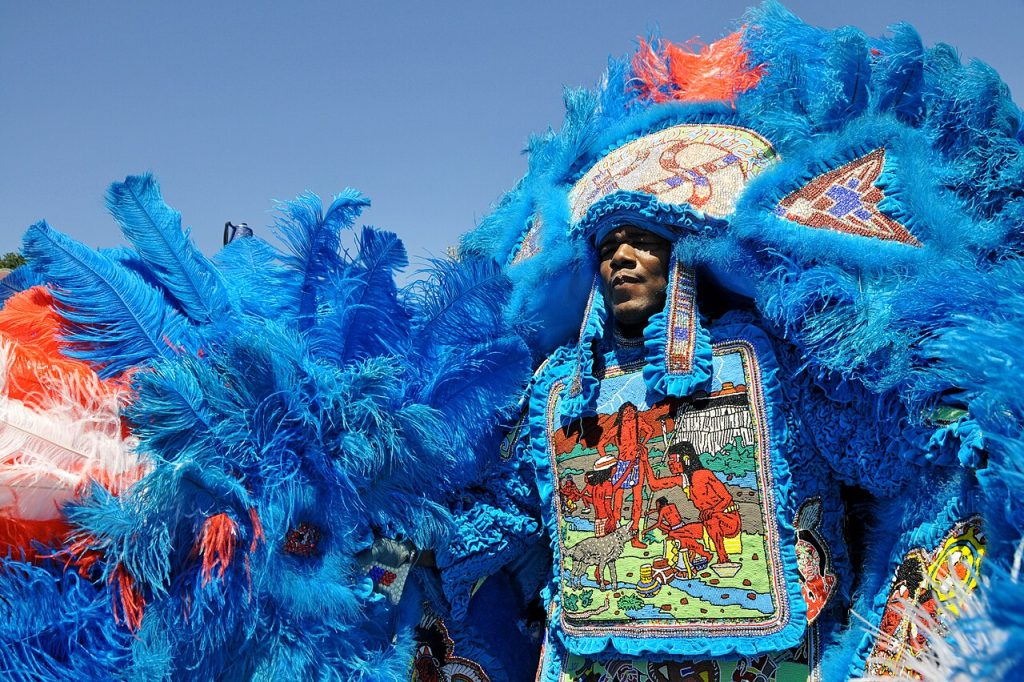
But most important among Wein’s changes was his vision. He imagined a festival that was as much about New Orleans’ dynamic culture more broadly as it was about its music specifically. Wein wanted a daytime festival with multiple stages featuring a variety of indigenous music styles—jazz, of course, but also blues, rock and roll, gospel, Cajun, zydeco, and more. Outside of the music, he wanted booths selling Louisiana cuisine, as well as local arts and crafts, all highlighting the region’s African, Caribbean, and French influences.
“This festival could only take place in New Orleans,” Wein said, “because here and only here is America’s richest musical heritage.” When asked about the potential of his New Orleans Jazz & Heritage Festival, he responded, “New Orleans, in the long run, should become bigger than Newport in jazz festivals. Newport was manufactured, but New Orleans is the real thing.”
Wein’s vision came to fruition with his New Orleans Jazz Fest’s debut in 1970. Tickets costed a (very, very) modest $3. The festival took place in what is now Louis Armstrong Park, located just outside the French Quarter. This location wasn’t an accident: it was once the site of Congo Square, where—during the 18th century—enslaved people gathered to play music and dance. It is hallowed ground in New Orleans, and Jazz Fest would add to its storied past.
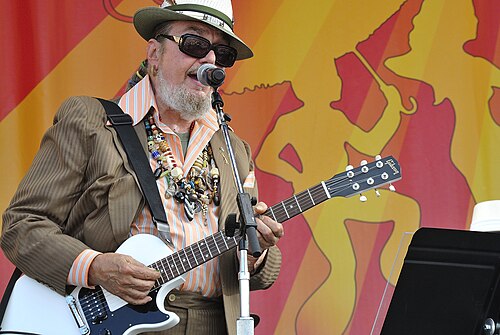
That first annual festival only had 350 people in attendance. This was less than the number of people it took to put on the show, but still, the atmosphere felt right. In a legendary Jazz Fest moment, iconic gospel singer Mahalia Jackson returned to New Orleans to perform. While enjoying the event, she noticed the Eureka Brass Band leading a second-line through the grounds. Jackson grabbed Duke Ellington and joined the parade. Wein saw them and handed Jackson a microphone to sing, creating what many believe to be the first great Jazz Fest moment and the perfect encapsulation of what the festival would mean to its future fans.
Growing into an institution
By 1972, the festival found its permanent home at the 145-acre Fair Grounds Race Course site. This gave Jazz Fest room to expand, reaching attendance figures of 80,000 people by 1975—up notably from its 350-person debut just a half-decade earlier. This was also the first year the festival released its annual limited-edition silkscreen poster series. These posters are now collectibles: a 1975 poster can go for $5,000! In 1976, Jazz Fest expanded to two full weekends and, for the 10th anniversary, organizers attempted a third weekend. (One of the weekends was cancelled because of rain.)
The festival continued to grow despite challenges in the New Orleans economy. By the end of the 1980s, more than 300,000 people were attending the festival and the nighttime concerts that surrounded it each year. In the 1990s, a second Thursday was added to the fest, and additional cultures were represented thanks to the popular International Pavilion—which features a new visiting country each year, such as Martinque, Brazil, Mali, and South Africa—as well as a stage and area featuring local American Indian cultural contributions. The New York Times noted that Jazz Fest had “become inseparable from the culture it presents.”
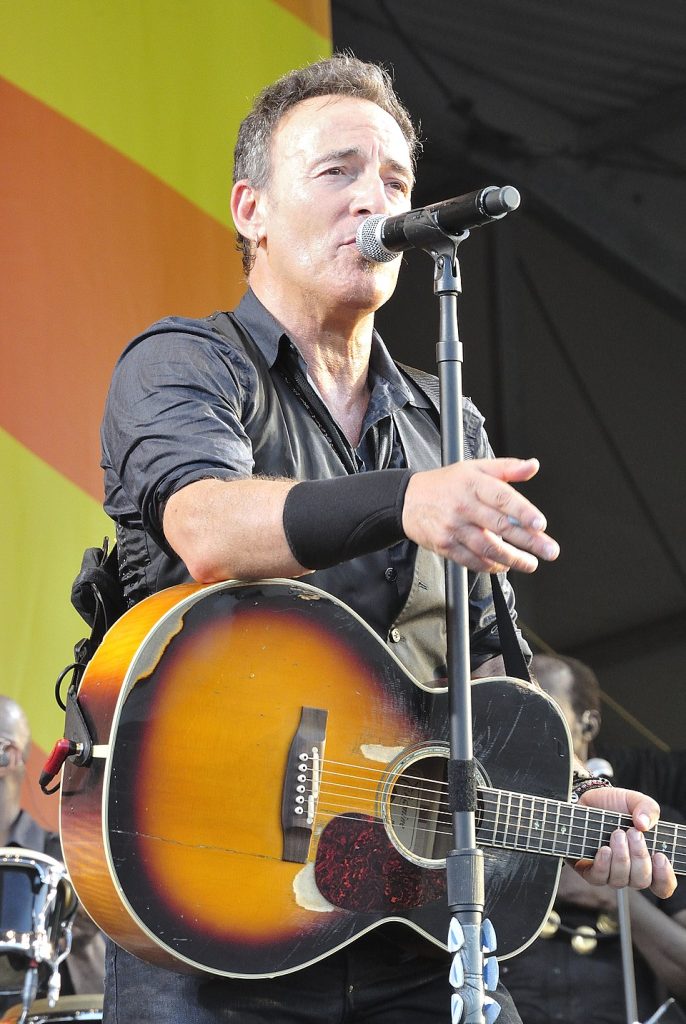
In 2001, celebrating Louis Armstrong’s centennial birthday, total attendance reached a record high exceeding 650,000. But, after Hurricane Katrina struck in 2005, the following year’s Jazz Fest was in serious danger. Important donations from sponsors such as Shell Oil allowed the event to go on, however, and many consider Bruce Springsteen’s performance that year to be one of the most memorable in the festival’s history. “Sometime, somewhere, a more dramatic and exhilarating confluence of music with moment may have existed than Bruce Springsteen’s appearance tonight at the 37th annual Jazz & Heritage Festival here,” said Los Angeles Times music writer Randy Lewis, “But in nearly 40 years of concert-going, I haven’t witnessed one.”
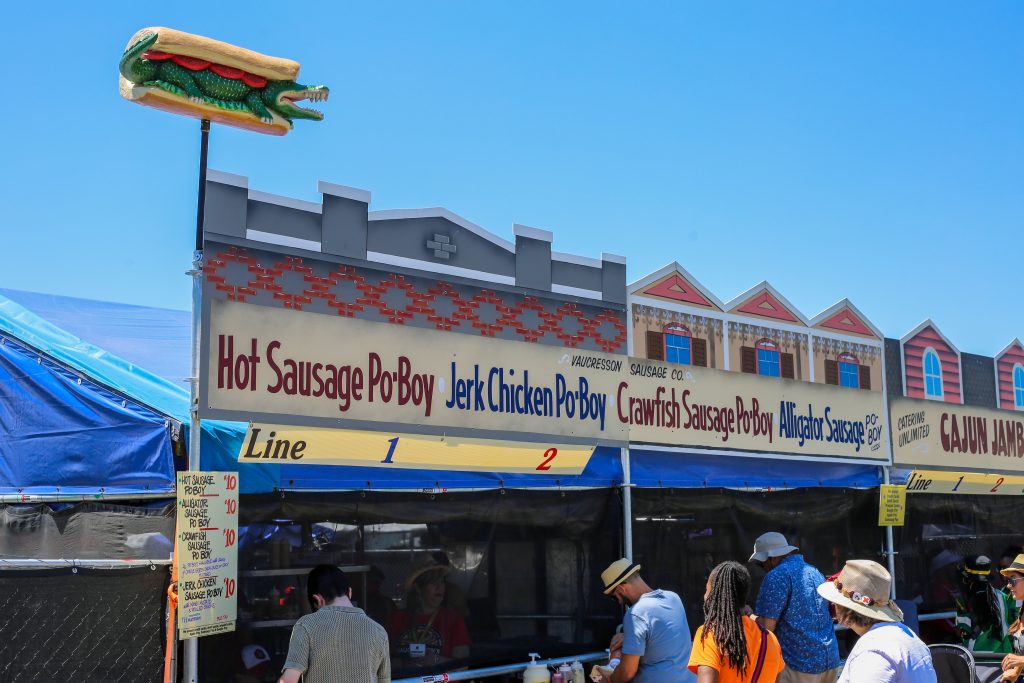
There have been countless iconic Jazz Fest memories since. The festival has taken place every year since its 1970 founding, with the exception of the 2020 and 2021 iterations due to the COVID-19 pandemic. Even then, New Orleanians across the city “Fested in Place” by listening to old recordings of previous festivals and eating the iconic food one would find at the fairgrounds.
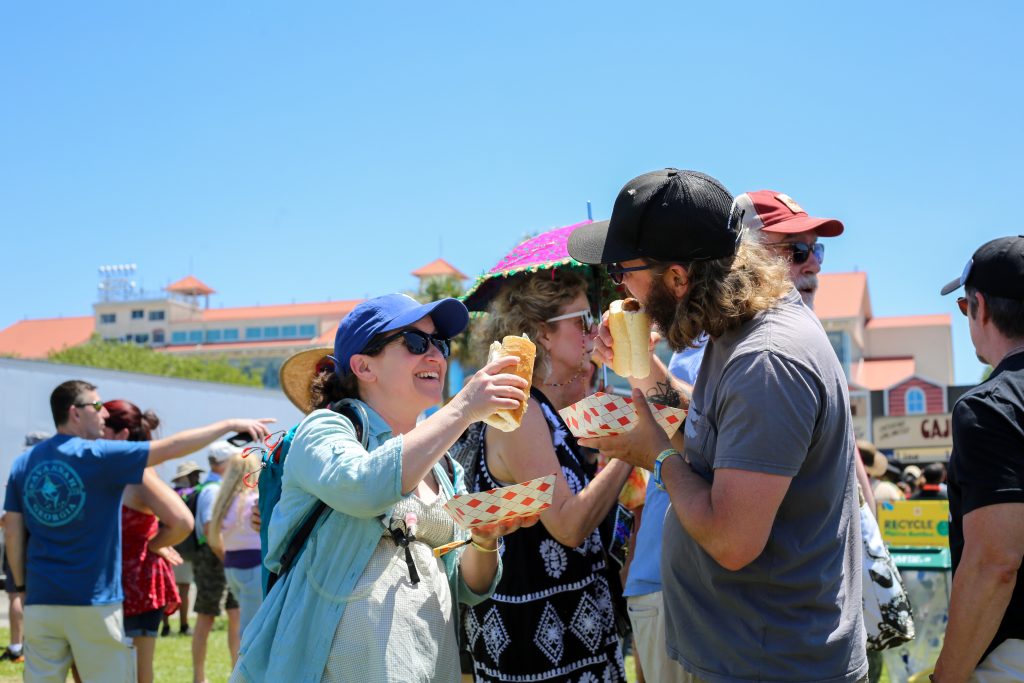
For many, the food is as essential a part of the experience as the music. Only one vendor, Vaucresson’s Sausage Company, has been present for each version of the New Orleans Jazz and Heritage Festival. Owner Vance Vaucresson says he doesn’t plan on missing the festival any time soon.
“Miss it?” he asked, rhetorically. “I’ve been here since I was a kid. Jazz Fest is New Orleans and New Orleans is Jazz Fest. It’s not going anywhere and neither am I.”
Just as George Wein imagined it.