

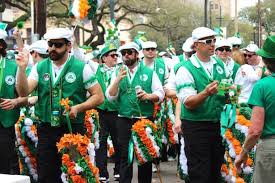
St. Patrick’s Day is nearly upon us! It has been mere weeks since Mardi Gras, but we’re ready for another parade-centric celebration. St. Paddy’s Day parades are held across the globe, but in New Orleans, they really make sense. We’re a city with a ton of Irish history.
For example, by the 1880s, the neighborhood approximately encompassed by Magazine Street to the north, First Street to the east, the Mississippi River to the south, and Toledano Street to the west had been given the name, “Irish Channel.” But how did it get that name?
Some say it’s because the Irish “channeled” into the area during the earlier decades of the 19th century. Others say it’s because heavy rains would pool up in the streets of this neighborhood heavily populated by Irish immigrants. (Maybe the poor drainage was meant as a sarcastic reference to the waterway separating Ireland and England, known as the “Irish Channel” in the 19th century.)
The true answer, unfortunately, is likely lost to history.
And how Irish did the Irish Channel get? Actually, not as Irish as people tend to think. While there was a large proportion of Irish immigrants in the neighborhood by the middle of the 1800s, it was really more of a community for immigrants in general. In fact, there were more Germans in the neighborhood than Irish; and the numbers of French, British, and African Americans were also sizable.
That’s not to say, there weren’t a lot of Irish in New Orleans. They just didn’t all settle in that one neighborhood. By 1850, somewhere between 20%and 25% of the city was Irish!
Close your eyes and imagine walking around New Orleans today and hearing an Irish accent from one out of every four residents. It must have been an amazing place to live.
Our city was home to the largest number of immigrants from Ireland in the American South, and those immigrants did so much to build our current home. So let’s look at how they got here, what they did once they were here, and how we can honor those contributions during the weeks leading up to St. Patrick’s Day.
The Colonial Irish
Another common misconception is that immigration from Ireland to New Orleans began in earnest during the Potato Famine of the mid-19th century. Actually, the Irish began arriving once the Spanish took over Louisiana from France in 1763.
In fact, Louisiana’s second governor under Spanish rule was Alejandro O’Reilly, an Irishman by birth who enlisted in the Spanish army to serve a Catholic monarch. (Why? More on this later.)
O’Reilly was sent to New Orleans to restore order after more than 500 French, German and Acadian Louisianians — who preferred French rule to Spanish rule — banded together to expel the previous Spanish governor, Antonio de Ulloa.
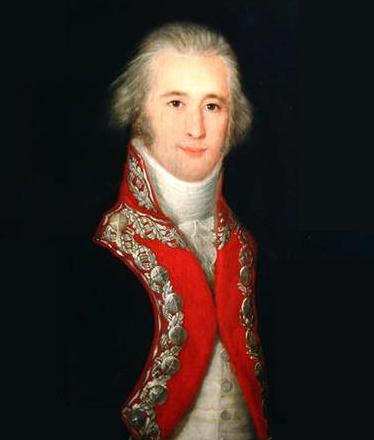
When O’Reilly arrived in 1769, he did so with 2,000 “Spanish” soldiers — many of them Irish. He invited 12 French leaders of the rebellion against Ulloa to dinner. (If we were them, we wouldn’t have accepted this invitation, but they did.)
After hearing their account of the events, O’Reilly ordered six of them to death. The street on which they were executed earned the name “Frenchmen Street,” in honor of the dead, and the Irish Spanish governor earned the nickname, “Bloody O’Reilly.”
When New Orleanians think of early Irish immigrants to the city, we tend to think of them as poor and working class. In the 1700s, that was not the case. The Irish generally arrived for military service or business. Many remained in the city long after O’Reilly had left, with jobs as wide-ranging and lofty as running the area’s militia, negotiating with American Indians, and supplying the entirety of the army with flour.
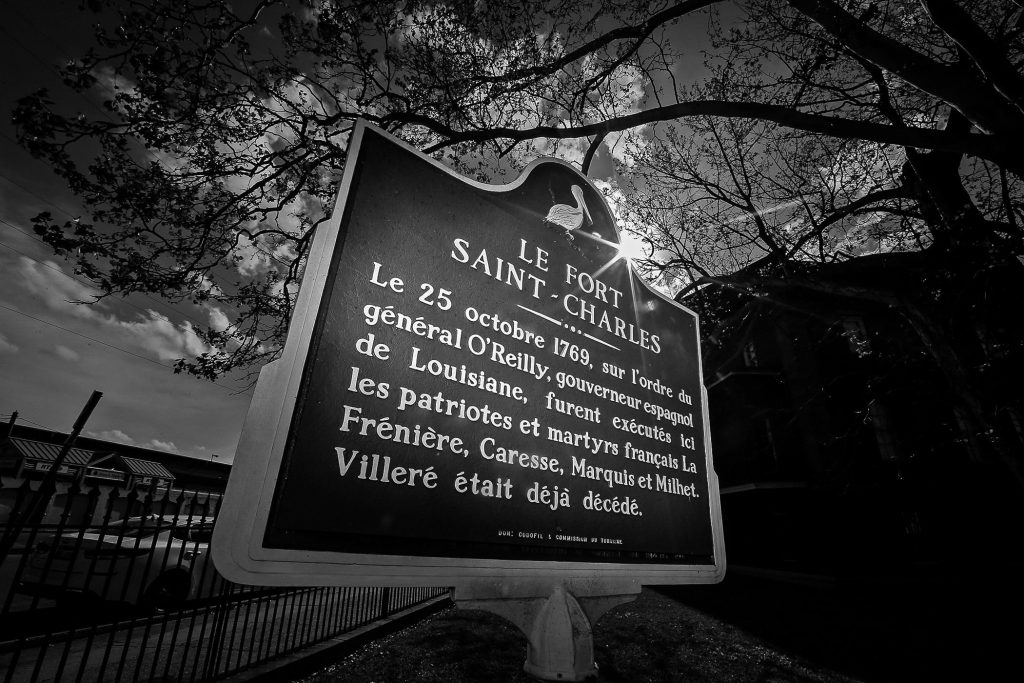
But why did so many Irish choose to serve the Spanish monarch? In short, Catholic Ireland was being ruled — and often persecuted — by Protestant Britain.
The British government enacted brutal Penal laws during the 17th and 18th century that were far-reaching, but had the combined effect of economically destroying Ireland’s Catholic subjects. For example, plots of land that had been owned by a family for centuries, could now be taken from them just because that family happened to be Catholic.
Rather than endure persecution, many Irish families emigrated to Catholic countries like Spain and France. Then, after a 1798 uprising in Ireland failed to end British rule, a larger wave of Catholics decided to also leave their home country rather than face continued persecution; and many came to places in America that were friendly to Catholicism, such as New Orleans.
Passage from Ireland to the New World wasn’t cheap, so, like the wave that had arrived in earlier decades, these Irish weren’t poor. This group tended to be in the middle class and worked as financiers, doctors, attorneys, educators, journalists, printers, and more.
As opposed to their predecessors, this group of Irish that arrived after the failed 1798 rebellion were more likely to come directly from Ireland and with a strong sense of Irish heritage. They created the first Irish charitable and social club, as well as their own local militia known as the Republican Greens and an organization, the Friends of Ireland, that collected money to send back to pro-Catholic candidates in Ireland.
This growing community would be attractive to an even bigger wave of Irish immigrants arriving just decades later.
A Green Wave
During the 1820s and 1830s, yet another wave of Irish immigrants arrived in Louisiana. But worsening conditions back home meant this group was much poorer than the first.
Many of them were escaping the economic depression afflicting all of Europe due to the recently concluded Napoleonic Wars. Ireland’s high population density — as well as a series of poor harvests and periodic famines — motivated many residents to leave their homes.
The booming cotton business also contributed. Ships would depart the Mississippi River for Europe, full of cotton. Rather than return empty, they would offer cheap passage to Europeans looking for opportunity in America. The squalor impoverished Irish met on these ships earned the vessels the collective nickname, “Floating Coffins.”
The antebellum period was a golden era for New Orleans’ economy and the hope of opportunity — plus the heavily Irish and Catholic populations — made for an appealing destination. Local officials also tricked many of these immigrants, convincing them that the major Irish centers of the Northeast — like Boston, New York and Philadelphia — were much closer to New Orleans than they actually were.
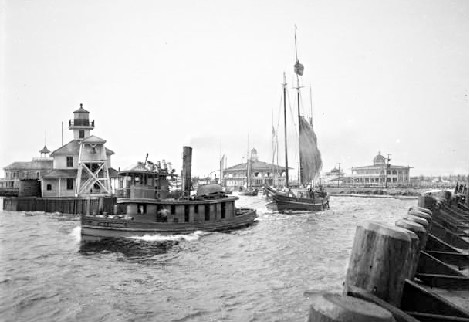
to the left; destroyed during Hurricane Katrina, it has since been rebuilt as a museum and education center.
Like in much of America, Irish immigrants in New Orleans helped to build rail lines, roads and canals. They arrived in the city in large numbers in the 1830s, which is the same decade the Pontchartrain Railroad and the New Basin Canal were finished. (It wouldn’t paint the complete picture, however, to say that Irishmen only helped to build the infrastructure. Several of their countrymen also held stake in a company that owned and financed the projects.)
Building the New Basin Canal was an especially dangerous job. The canal was built as a shipping lane from Lake Pontchartrain through the swamp to the booming “American” business district of the city, now known as the Central Business District. It was meant to compete with the Carondelet Canal (which now partially exists as Bayou St. John) that connected the lake to the rival Creole downtown portion of the city in the Treme and French Quarter.
Clearing swamps exposed workers to yellow fever, cholera and many other deadly diseases. Mortality rates were so high, slave owners didn’t want to risk the lives of their human property on the project. New Irish immigrants, on the other hand, were considered expendable, with boatloads of poor Irish flooding the city and willing to perform back-breaking work for $1 per day. From 1832 to 1838, it’s estimated that between 8,000 and 20,000 immigrants died digging the canal.
The New Basin Canal stretched from present-day West End Boulevard and Robert E Lee Boulevard (in the 19th century, this was where the lakefront was) all the way to today’s Union Passenger Terminal at the edge of the CBD. It served its intended purpose for more than 100 years, and then was filled in by about 1950.
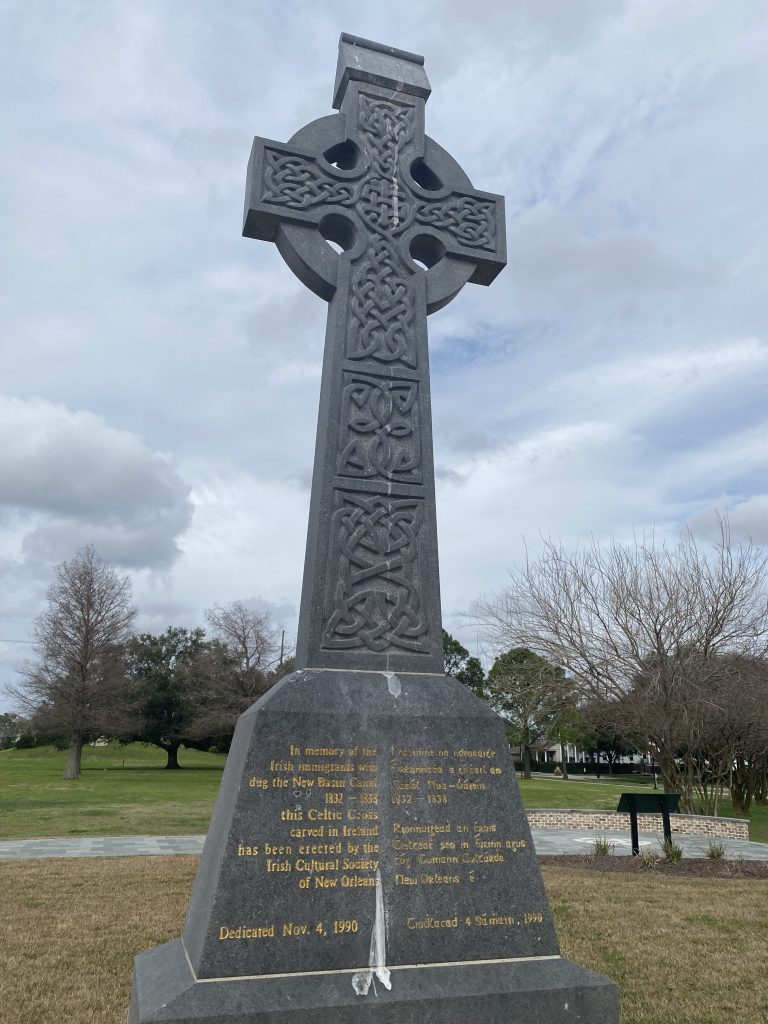
Most of the dead were buried in unmarked graves wherever they died along the canal. To rectify this, in November of 1990, the Irish Cultural Society of New Orleans dedicated a large Kilkenny marble Celtic cross in New Basin Canal Park to commemorate the Irish workers who labored on the city-changing project.
Looking forward
That’s where we’ll end today, but in our next post we’ll explore the rest of New Orleans’ history as it relates to our Irish immigrants. We will begin with the infamous Potato Famine, explore notable Irish-Americans from the Crescent City, and look at how we celebrate St. Patrick’s Day today.
Until then, we hope Lent has been going well and is allowing you to rejuvenate ahead of Springtime.