

We all know there is no shortage of famous New Orleanians. Louis Armstrong and Britney Spears. Reese Witherspoon and the Manning family. And that’s just the tip of the iceberg.
But are you familiar with Beulah and Albert Ledner? Ironically, for all of the renowned citizens from our region, the most influential mother-son duo in local history might not be known to you by name.
Just because their names don’t roll off your tongue doesn’t mean you aren’t aware of their accomplishments. Trust us, you have probably seen his architecture and tasted her cakes. If you haven’t, you will want to before this article is done.
Like mother…
Nowadays king cake is the cake most closely associated with southeast Louisiana. King cake is fantastic and we at Gambino’s would never try to get in the way of your love for this delicious Carnival season tradition. (In fact, with Mardi Gras coming up, we’re ready to help you satisfy this tradition.)
If there is an issue with king cake, however, it’s that it is only available between January 6 and Fat Tuesday.
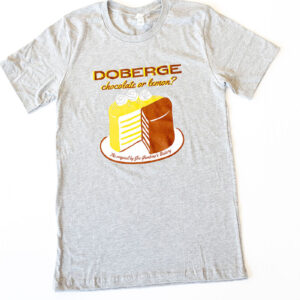
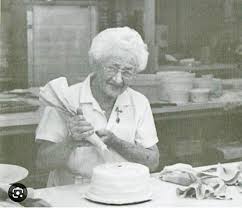
Fortunately, Beulah Ledner gave us another decadent Louisiana tradition—one that can be enjoyed year-round. Her doberge cake remains popular nearly a century after she adapted a related European pastry to be more suitable for New Orleans’ hotter and more humid climate.
Beulah’s doberge is a descendant of the Austro-Hungarian dobos (pronounced DOH-bosh) torte, an elegant, layered pastry invented in late-19th century Budapest. Hungarian chef József C. Dobos created the dobos torte to outlast other cakes in terms of freshness during an age with limited cooling techniques. Its many layers of then-rare buttercream filling, and its hardened caramel top helped prevent Dobos’ Italian-style sponge cake from drying and allowed it to be shipped.
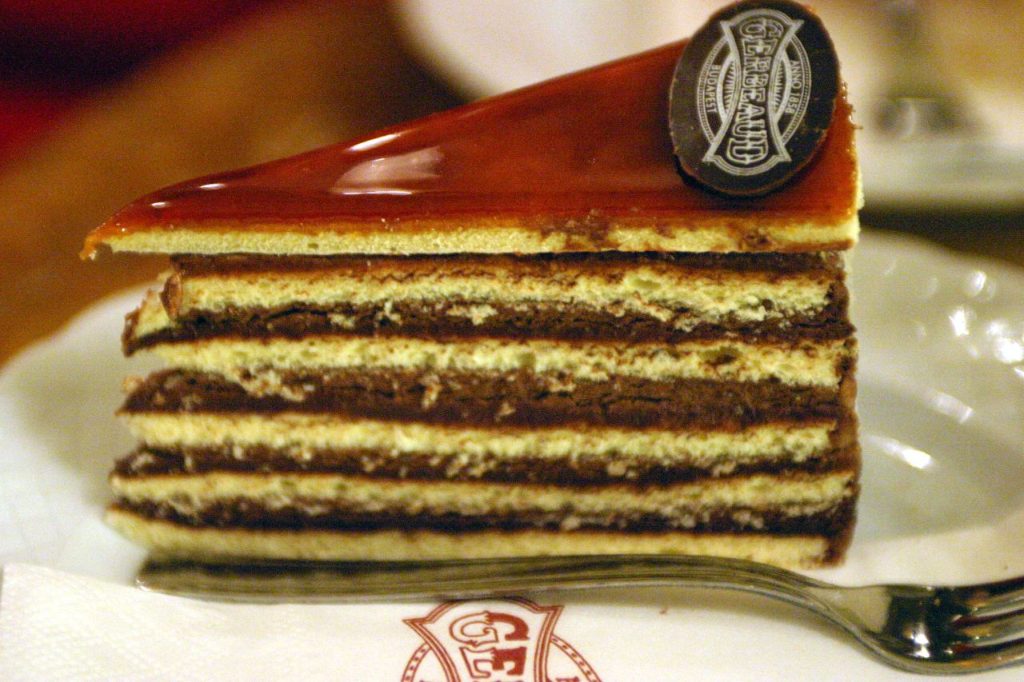
The woman credited with turning the Hungarian chef’s dobos torte into New Orleans’ doberge cake was none other than Beulah Ledner, born in nearby St. Rose in 1894. She is from a family of European-Jewish immigrants. In fact, her grandfather was a respected baker in Germany.
During the early years of the Great Depression, Beulah supplemented her family’s income by opening a home bakery called Mrs. Charles Ledner’s Superior Home Baking. Her lemon pies were a hit, but it was her version of the Hungarian dobos torte—by then popular among Jewish-American families—that would leave a lasting mark on New Orleans cuisine.
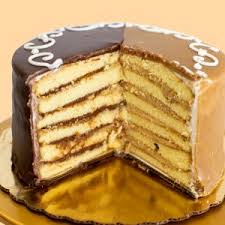
Beulah adapted the cake to a city that was much hotter and more humid than Budapest. She felt local palates would prefer a lighter dessert, so she not only introduced yellow butter cake in place of the dobos torte’s sponge, but she also substituted a lighter custard filling for the original’s heavier buttercream.
Finally, to fit the French heritage of the new cake’s home, Beulah gave the dessert a francophile touch, switching its name from dobos to doberge.
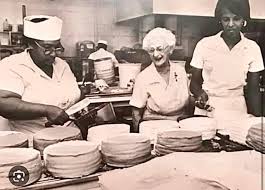
Her intuition proved correct. She earned the title “Doberge Queen of New Orleans” as she made doberge cake for the city’s residents for decades. Her business’s success prompted her to turn her operation into a brick-and-mortar that moved several times before closing in 1946 when Ledner suffered a heart attack.
Joe Gambino agreed to purchase the bakery and recipes from her, resulting in the founding of our very own Joe Gambino’s Bakery.
Once Beulah recovered, she opened a new bakery—this time in Jefferson Parish—where she churned out doberge cake until she was 87 years old. That bakery would eventually become Maurice French Pastries
Now, approaching a century since its creation, doberge in the style of Beulah Ledner is still available and popular in southeast Louisiana. Our doberge recipe at Gambino’s is almost exactly what Beulah made so long ago: a light, refreshing alternated with a rich cake. Perfect for New Orlans, just like Beulah Ledner wanted it to be.
…like son.
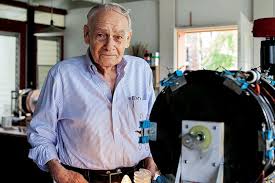
As mentioned at the start of this article, Beulah isn’t the only Ledner who left a lasting impact on our city. Her son, Albert Ledner, would become one of the city’s most important architects.
Albert was born in 1924. He was actually born in the Bronx in New York, but was living in New Orleans by the time he was nine months old. At Lusher and Fortier schools, he was known as a “tinkerer,” filling notebooks of sketches including those of buildings he admired.
He enrolled in the Tulane University School of Architecture, but left college in his second year to volunteer with the U.S. Army Air Corps during World War II. Stationed near Tucson, Arizona, Albert would use his time off to visit Taliesin West, one of the schools run by the renowned Mid-Century Modern architect, Frank Lloyd Wright.
Mid-Century Modern—most famously championed by Lloyd Wright—prioritizes the buyer, allowing the architect to build a home that is personal and unique to the future homeowner. This is in contrast to another popular style of the time, the International Style, which provides design solutions that are said to be indifferent to location, site and climate.
Upon completing his military service, Albert finished his architecture degree at Tulane in 1948. With no money to his name, he traveled to another Frank Lloyd Wright school, Taliesin Spring Green School in Wisconsin, and basically begged his way into a seat. His time at Taliesin had a major impact on his future architecture, and his studies included daily tea exchanging ideas with the influential founder of the school and his wife.
Lloyd Wright said, “Human houses should not be like boxes, blazing in the sun.” Rather, they should reflect the unique personality of the homeowner.
It was an incredible time for Albert and he only left the school to return to New Orleans when he was hired to design his first home.
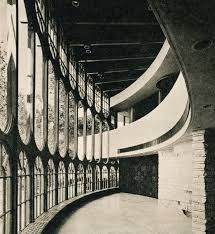
Albert’s imagination and sense of humor often shown through in his designs. For example, in his 1951 project, the Lake Vista neighborhood Kleinschmidt Residence, Albert created light fixtures made of Schlitz beer as a distinguished feature of the home. On Park Island, where many of Albert’s most renowned homes can be found, his Cointreau House included skylights and light fixtures fabricated from Cointreau liqueur bottles.
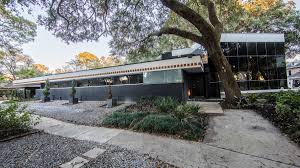
In 1961, Albert was asked to design another Park Island home. This time his client was the Sunkel family, a couple who loved to smoke cigarettes and cigars. The result was a home featuring 1,200 amber-colored glass ashtrays on the exterior. The house was later owned by former Mayor Ray Nagin, and curious locals still gawk at the property to this day.
Ledner’s other Park Island home, built in the mid-1960s, is called The Galatoire House and incorporates historical elements collected by the client, Leonie Galatoire, such as a curvilinear curtain of windows (installed, both, upside down and right side up) salvaged from an 1866 convent.
John P. Klingman, a professor of architecture at Tulane University, told the New York Times that Ledner “was one of the first people, not just in New Orleans but around the country, to incorporate historic elements in such unusual ways in a modern project.”
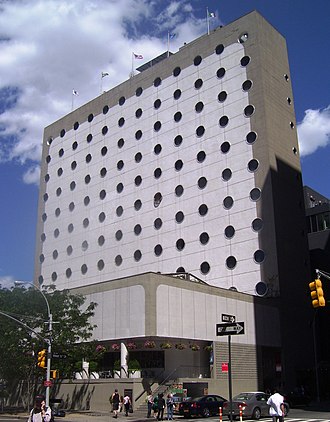
This is just a small sampling of the stunning residences built by Albert. His projects were not always residential, however, and they weren’t even always local. He began designing buildings for the National Maritime Union in both New Orleans and New York City.
His work still grabs the attention of passersby in Manhattan. Three of his buildings in the New York City borough include hundreds of windows suggestive of portholes, intended to be fitting for a hiring hall of maritime sailors. One such building is at 346 West 17th Street. Another, on Ninth Avenue between 16th and 17th Streets, is said to look like a pizza box with porthole windows.
“Designing for Life: The Modernist Architecture of Albert C. Ledner” is a documentary about Ledner’s incredible contribution to American architecture. He passed away in 2017, but his legacy will live on as long as the buildings he designed still stand; just as his mother’s legacy will continue as long as New Orleanians continue to enjoy her delicious cake.
If we have anything to do with it, that will be for generations to come!