

New Orleans wouldn’t be New Orleans without influences from a variety of ethnic groups over the centuries: the French, the Spanish, Africans, and American Indians often get the lion’s share of the credit. In a recent post, we even wrote about how important Irish immigrants and their descendents have been in shaping the Crescent City.
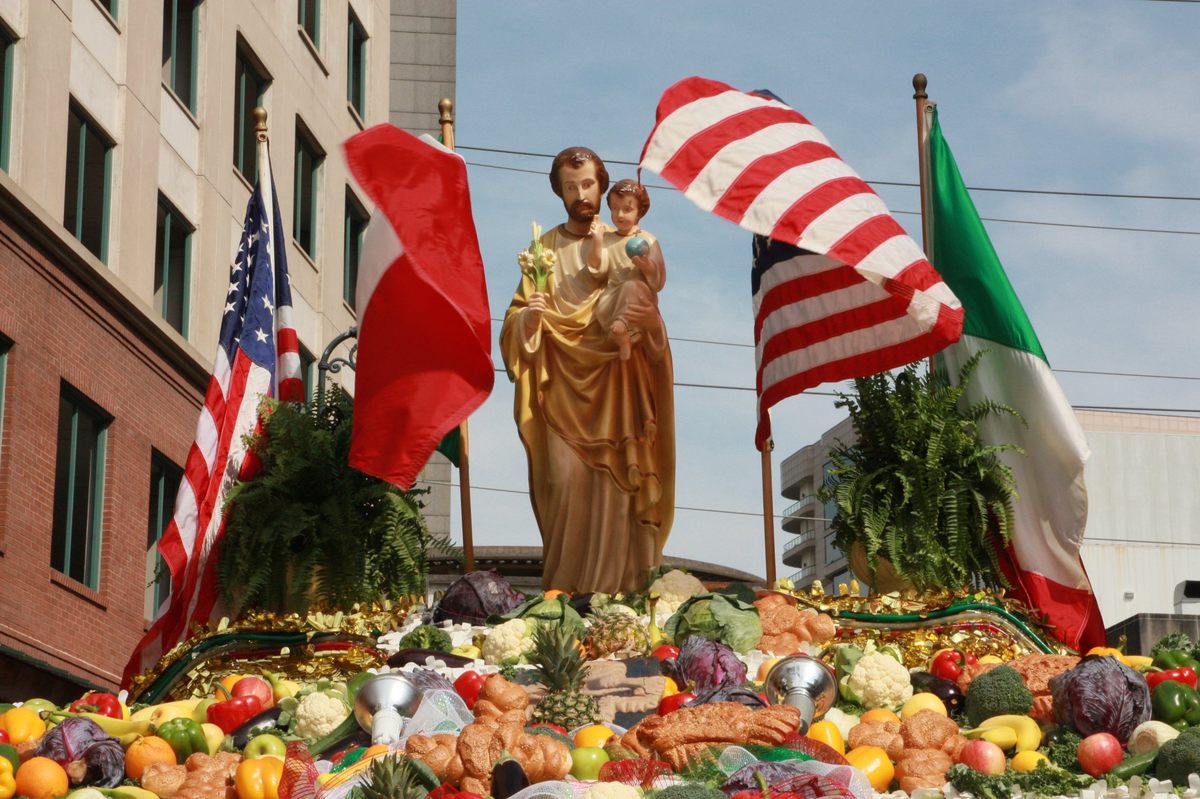
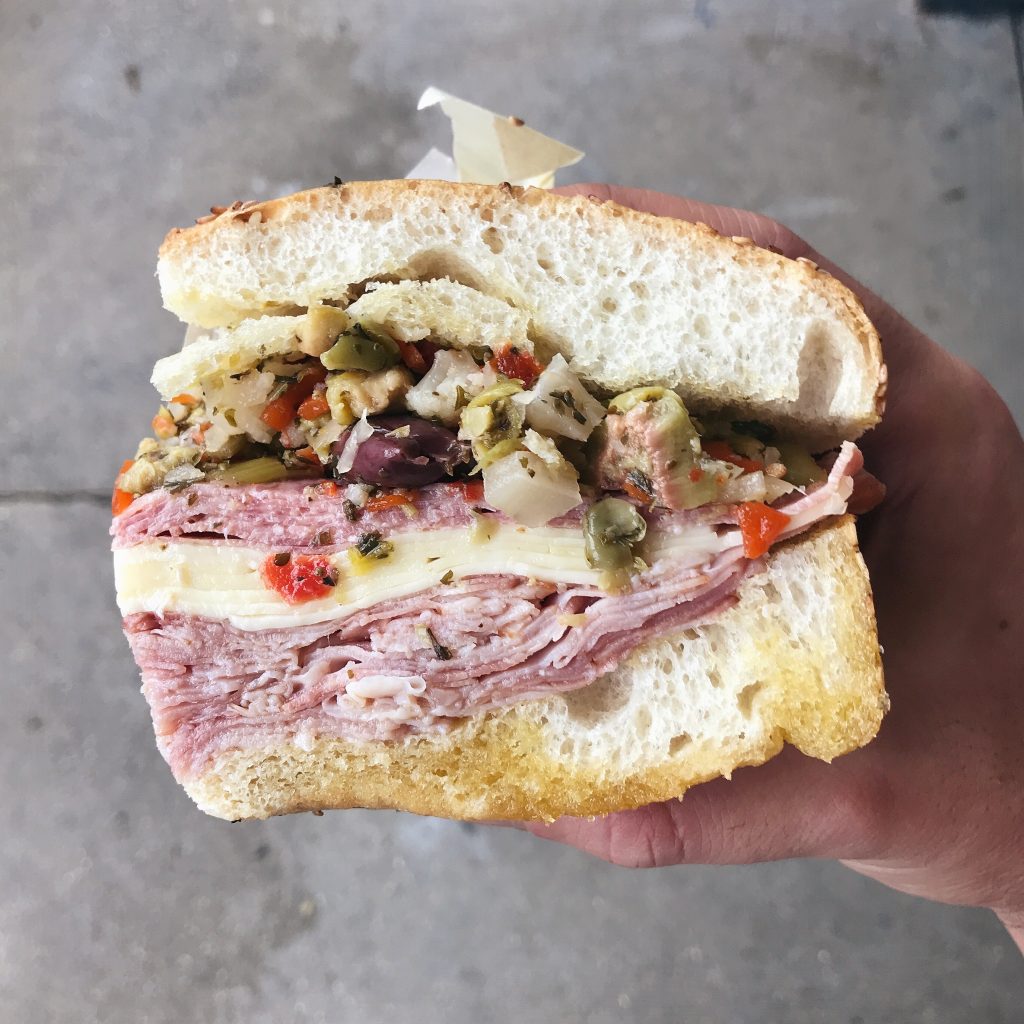
But it is impossible to talk about essential influences on the Greater New Orleans Area without spending a significant time talking about the Sicilians. Think about it: creole-Italian cuisine such as the muffuletta came straight from Sicilian immigrants. Sicilian-American jazz musicians such as Nick LaRocca of the Original Dixieland Jass Band made the first jazz recordings, while Louis Prima became a global icon of the swing era. We even just celebrated St. Joseph’s Day and its delicious altars in honor of the patron saint of Sicily and in remembrance of a medieval Sicilian famine.
In fact, between 1884 and 1924, an estimated 290,000 to 300,000 Italian immigrants, the vast majority of whom were Sicilian, moved to New Orleans. This was second only to New York City and this mass migration made parts of the French Quarter so Sicilian that it was nicknamed, “Little Palermo,” after the Sicilian capital city.
But that leaves a very important question. Why did so many Sicilians come to New Orleans? What was so wrong with Sicily at the time? And what was so right with New Orleans?
Before there was Italy
The country of Italy as we know it was not a thing until 1861. Before that, the land that is now Italy was occupied by rival kingdoms. Sicily, for example, had been ruled by the Bourbon dynasty since 1735. This is the same Bourbon dynasty that ruled Spain, Naples, and pre-French Revolution France. (Also, the same dynasty that colonized New Orleans and who Bourbon Street is named after.)
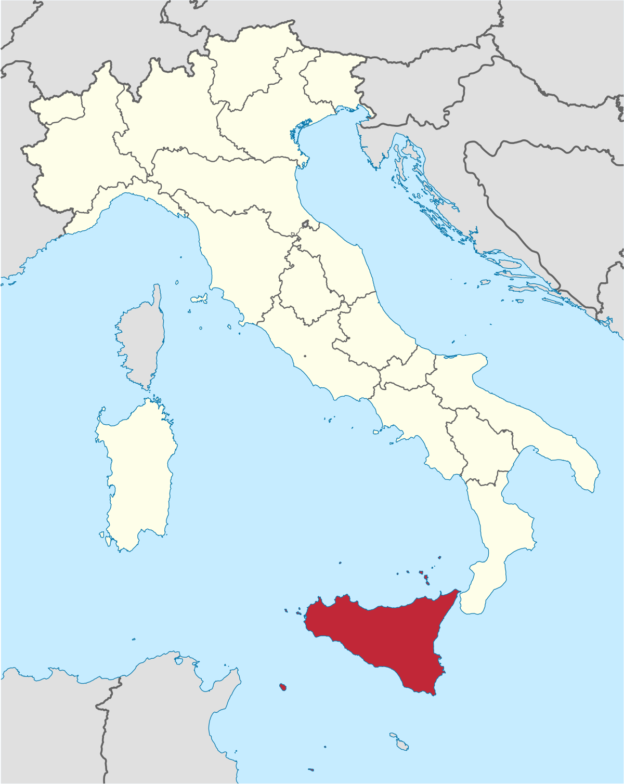
In the middle of the 19th century, Sicily was the battleground for multiple revolutions against the ruling Bourbons that would have a devastating effect on the island’s infrastructure and population.
Smaller revolts in 1820 and 1837 were the result of hostilities by Sicilians towards Bourbon rule for many reasons including the suppression of Sicilian autonomy, island-wide poverty, a harsh police regime, and a serious cholera epidemic which caused almost 70,000 deaths in Sicily and stoked mistrust towards the Bourbon government (some Sicilians felt the Bourbons were intentionally poisoning their water and air).
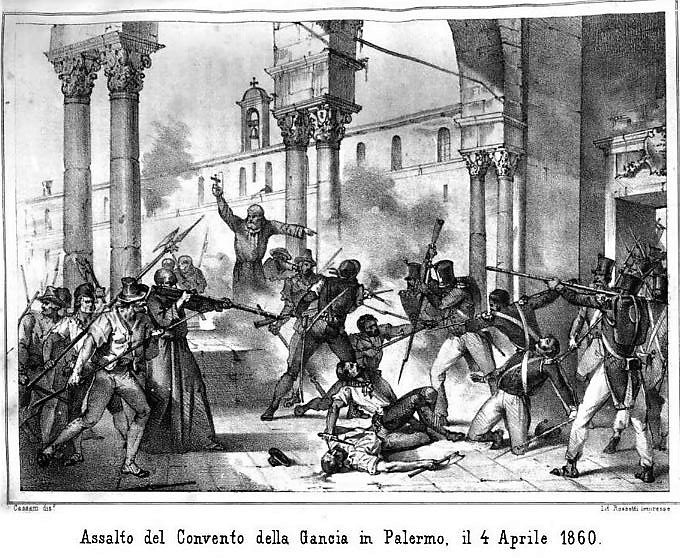
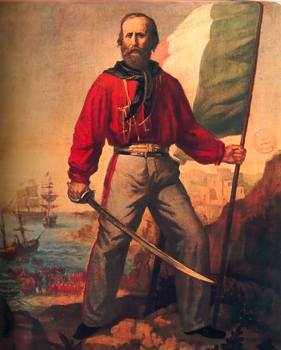
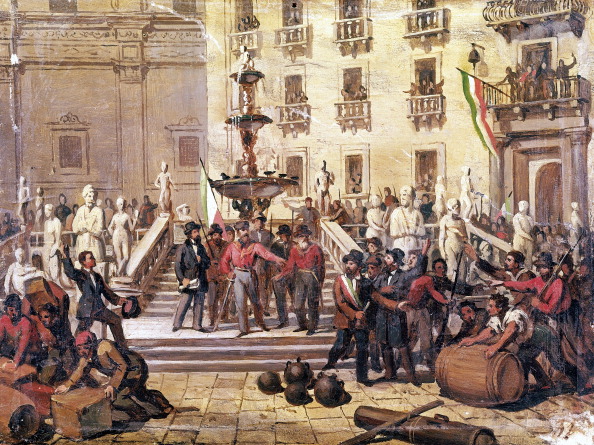
This led to the 1948 Revolution, a massive popular uprising in Palermo that lasted a violent 16 months before being brutally suppressed by Bourbon troops. Finally, in 1860, a campaign known as The Expedition of the Thousand in 1860 was led by Giuseppe Garibaldi and his “Redshirts,” who invaded Sicily to overthrow the Bourbons.
Unification bumpy to say the least
Risorgimento, the unification of Italy, was finalized in 1861. The conquering Garibaldi made promises of land reform and was initially welcomed by some Sicilians. Many historians have since said that unification was less a peaceful merger of regions and more of a Northern conquest of Sicily and the South.
For starters, the government (located in Turin and then Florence, both in the northern part of the country) deployed more than 100,000 troops to the South between 1861 and 1871, killing an estimated 20,000 to 40,000 people. The new country also imposed a Northern standard for education and administration, often marginalizing the Sicilian language and local customs. Finally, the substantial assets from Sicily’s treasury were moved North to Turin, while the South’s standard of living plummeted from this extraction of wealth.
To pay for the newly unified country, the government introduced high taxes on milling grain and salt, which crushed the already impoverished peasantry. To defend it, a mandatory seven-year military service was introduced. This took young, able-bodied men away from family farms—many in Sicily and the South—where they were the primary source of labor. Then, when most of Italy’s industrial investment was concentrated in Northern Italy, the South’s struggling agricultural economy further stagnated. New laws requiring land to be distributed evenly among all male children left many of those farms too small for even subsistence farming.
Domestic oppression wasn’t the only challenge for Sicily, though. Three major industries that sustained the island’s economy failed nearly simultaneously. In the 1880s, the phylloxera vine blight arrived from France, decimating vineyards across the island and ruining thousands of winemaking families. Around the same time, competition from other global markets caused a sharp drop in prices for Sicilian lemons and oranges. The discovery of sulfur deposits in the United States greatly reduced Sicily’s advantage in this worldwide industry they once dominated.
Things were looking bleak for Sicily. Absentee landlords controlled much of the farmland and exploited tenant farmers, leading to widespread poverty known as la miseria.
In the late 19th century, the Sicilian Workers’ Leagues rose up against these miserable working conditions and the region’s high taxes. That was met by a crackdown by Prime Minister Francesco Crispi who, in 1894, declared a state of emergency, using the army to dissolve the leagues and imprison their leaders.
Enough was enough. Life was dire for Sicilians and many were forced to choose between starving on the island they loved or immigrating to someplace unknown. Many chose the unknown.
Why New Orleans?
Okay, so we understand why Sicilians were trying to leave Southern Italy. But why did they come to New Orleans in the hundreds of thousands?
One reason is that, long long before mass migration, a direct shipping route existed between Palermo and New Orleans for the citrus trade. Starting in the 1830s, Sicilian lemons were imported to New Orleans to help preserve food and prevent scurvy. Oranges were shipped from the island, as well. Because the ships were already traveling to New Orleans to deliver fruit, they offered discounted steerage for the return trip. By 1881, passage from Sicily to New Orleans cost only $40, roughly a third of the fare to New York City.
It wasn’t only cheap fare that attracted Sicilians here, however. New Orleans also felt remarkably similar to home for many Sicilian immigrants. The subtropical, humid climate of the Gulf Coast mirrored the Mediterranean weather needed for fishing and citrus farming. Additionally, as a heavily Catholic city, New Orleans provided a familiar social and spiritual fabric that many Protestant northern U.S. cities lacked. Finally, as is often the case, chain migration took over, meaning that once “Little Palermo” was established in the French Quarter, residents sent letters and prepaid tickets back to relatives, pulling entire families to the city.
New Orleans, for its part, also wanted the Sicilians. Or, at least its business owners did. Following the Civil War, Louisiana sugar planters recruited Sicilians to replace the labor previously provided by enslaved people. The Louisiana Bureau of Immigration and the Louisiana Sugar Planters Association actively recruited Sicilian peasants for their perceived adaptability to hard work in heat, as well as their agricultural expertise. Labor agents distributed advertisements across Sicilian villages promising steady work, housing, and “pleasant” plantation conditions.
And, as we know, their strategy worked. It was a unique and perfect intersection of economic desperation in Sicily and an urgent labor demand in Louisiana.
The result was what is sometimes called The Great Migration, when nearly 300,000 Sicilians arrived in New Orleans over a 40 year period, ensuring the Crescent City would never be the same.